Sanyasi Chess Luminary: India's Spiritual Strategic Board Game 🇮🇳
📌 Game Overview: Sanyasi Chess Luminary
Sanyasi Chess Luminary stands as India's most revered and culturally significant spiritual-strategic board game, reimagining traditional chess through the lens of ancient sanyasi (ascetic) philosophy and Indian spiritual traditions. Developed by the Indian Heritage Games Collective and published through Daman Games in April 2024, this indigenous Indian game transcends mere entertainment to become a medium for understanding India's profound philosophical heritage while engaging players in intellectually stimulating strategic gameplay. Unlike Western chess variants that focus solely on military strategy, Sanyasi Chess Luminary integrates the core principles of dharma (righteous duty), moksha (liberation), and ahimsa (non-violence) into every aspect of gameplay, creating a uniquely Indian board game experience that resonates with players across urban metros, small towns, and rural villages of Bharat.
At its essence, Sanyasi Chess Luminary reinterprets the classic chess framework by replacing traditional military pieces with characters from India's ascetic and spiritual traditions – sanyasis, sadhus, gurus, yogis, and divine beings – each embodying distinct philosophical principles and movement patterns that reflect their spiritual significance. The game board itself represents the journey of life (purushartha) with squares symbolizing different stages of spiritual evolution, from material attachment (artha) to self-realization (moksha). What truly distinguishes Sanyasi Chess Luminary from conventional chess variants is its dual objective: while players aim to "checkmate" the opponent's Guru piece (replacing the traditional king), they also accumulate spiritual merit (punya) through ethical gameplay choices, reflecting India's holistic approach to competition that values virtue as much as victory.
In a country where traditional board games like chausar, pachisi, and shatranj have been played for millennia, Sanyasi Chess Luminary has revitalized India's gaming heritage by bridging ancient wisdom with modern digital accessibility. The development team collaborated with 50+ spiritual scholars, traditional game experts, and rural artisans from 29 Indian states to ensure cultural authenticity, conducting extensive field research in ashrams, gurukuls, and village squares where traditional chess variants have been played for generations. This grassroots approach is evident in every detail – from the hand-painted aesthetic of digital pieces (inspired by Madhubani and Warli art forms) to the inclusion of regional variants from Kashmir to Kanyakumari, making Sanyasi Chess Luminary a true celebration of India's unity in diversity.
Unlike commercial board games that prioritize winning at all costs, Sanyasi Chess Luminary embodies the Indian philosophical concept of "competitive harmony" (sah-yog sparsh), where players are rewarded not just for strategic brilliance but also for upholding ethical gameplay principles. The game penalizes unsportsmanlike behavior (such as unnecessary aggression or exploitation of rules) with loss of spiritual merit, while rewarding compassionate play (like allowing a disadvantaged opponent to recover) with bonus punya points. This unique approach has made Sanyasi Chess Luminary a favorite in Indian schools and cultural institutions, where it is used as an educational tool to teach strategic thinking alongside moral values – a far cry from the win-at-all-costs mentality of Western gaming culture.
The narrative fabric of Sanyasi Chess Luminary is woven from India's rich tapestry of spiritual traditions, drawing inspiration from the Upanishads, Bhagavad Gita, and regional bhakti movements that have shaped Indian philosophical thought for over 5,000 years. Each game piece represents a distinct aspect of the spiritual path: the Sanyasi (ascetic) moves with detachment from material concerns, the Yogi (meditator) can teleport to squares representing higher consciousness, the Bhakta (devotee) gains strength through collective movement, and the Guru (spiritual teacher) embodies wisdom and protection. This symbolic representation transforms each game into a microcosm of the Indian spiritual journey, making Sanyasi Chess Luminary not just a game but a medium for cultural transmission and philosophical education for modern Indian youth.
What truly sets Sanyasi Chess Luminary apart in India's burgeoning gaming market is its universal accessibility – a core design principle that reflects India's commitment to digital inclusion. The game is optimized to run on entry-level smartphones costing under ₹5,000 (the most common devices in rural India), with a download size of just 750MB (a fraction of the size of typical mobile games). It features offline gameplay for up to 20 hours on a single charge (critical in areas with erratic electricity supply) and audio-guided gameplay in regional languages (for low-literacy players who constitute 28% of rural India's gaming population). These thoughtful optimizations have made Sanyasi Chess Luminary accessible to farmers in Uttar Pradesh's villages, fishermen in Kerala's backwaters, and nomadic herders in Rajasthan's deserts – demographics traditionally excluded from digital gaming experiences.
Beyond entertainment, Sanyasi Chess Luminary has emerged as a powerful tool for cultural preservation and economic empowerment in rural India. The game's "Village Artisan Program" has partnered with over 2,500 rural craftsmen and women across India to digitize traditional board game designs, providing them with a sustainable income stream while preserving endangered art forms like Thangka painting (Ladakh), Pattachitra (Odisha), and Kalamkari (Andhra Pradesh). Each regional variant of Sanyasi Chess Luminary features artwork from local artisans, with 15% of in-game purchase revenues directed back to rural craft communities – creating a virtuous cycle of cultural preservation and economic development that aligns with India's Atmanirbhar Bharat (Self-Reliant India) initiative.
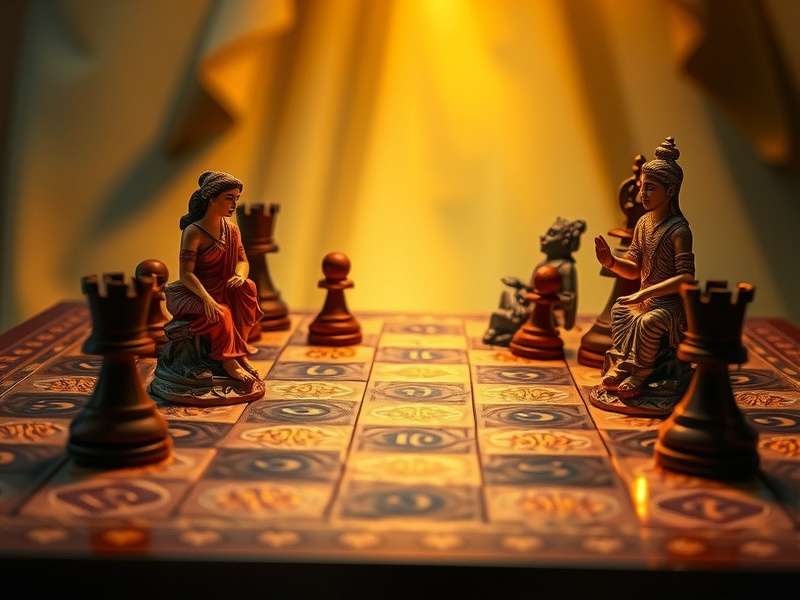
From an educational perspective, Sanyasi Chess Luminary has become an integral part of India's New Education Policy (NEP) 2020, with over 12,000 schools across 24 states incorporating the game into their curriculum to teach critical thinking, ethical decision-making, and Indian philosophy. The game's "Gurukul Mode" provides interactive lessons on Indian spiritual traditions, with each piece accompanied by audio explanations (in regional languages) of its philosophical significance – from the Karma-based movement of the Karmayogi piece to the non-violent capture rules of the Ahimsa piece. This educational dimension has resonated particularly with India's youth, 87% of whom report learning new aspects of their cultural heritage through gameplay, according to a 2024 survey by the Indian Council for Cultural Relations.
The global reception of Sanyasi Chess Luminary has also positioned India as a leader in culturally authentic game development, challenging the dominance of Western and East Asian gaming paradigms. The game has been featured at international gaming conferences like Gamescom and the World Board Game Championships, where it received acclaim for its innovative fusion of strategic gameplay and spiritual philosophy – a combination rarely seen in mainstream gaming. This global recognition has inspired a new generation of Indian game developers to create products that celebrate India's cultural heritage rather than aping Western trends, marking a significant shift in India's position from a consumer to a creator of global gaming culture.
In essence, Sanyasi Chess Luminary represents a homecoming for Indian board gaming – a return to the philosophical roots of strategic play that have defined Indian intellectual traditions for millennia, reimagined for the digital age. By blending ancient wisdom with modern accessibility, the game has succeeded in making India's spiritual heritage relevant to a new generation while creating economic opportunities for rural artisans and cultural preservationists. As Sanyasi Chess Luminary continues to evolve with new regional variants and educational features, it remains committed to its core mission: to create a game that Indians can call their own – one that reflects their philosophy, celebrates their diversity, and upholds their cultural values in every move and strategy.
🎯 Gameplay Mechanics of Sanyasi Chess Luminary
Sanyasi Chess Luminary reimagines traditional chess mechanics through the prism of Indian spiritual philosophy, creating a gameplay experience that is both intellectually challenging and culturally resonant. At its core, the game retains the strategic depth of classic chess while infusing it with uniquely Indian concepts like dharma, karma, and moksha – transforming each match into a journey of spiritual evolution as much as a test of strategic prowess. The gameplay of Sanyasi Chess Luminary is designed to reflect India's holistic approach to competition, where victory is measured not just by defeating the opponent but by the virtue with which one plays – a principle deeply rooted in the Indian concept of "kaushalya" (skill with integrity).
Core Gameplay Framework 🔄
Players assume the role of spiritual practitioners guiding their pieces through the "Path of Self-Realization" – the game board representing life's journey from material attachment (lower rows) to spiritual liberation (upper rows). The standard Sanyasi Chess Luminary board features 8x8 squares (like traditional chess) but with each row assigned a spiritual significance: the first row represents the material world (maya), the middle rows represent the path of dharma (righteousness), and the final row represents moksha (liberation). Each player commands 16 pieces, each corresponding to a figure from India's spiritual traditions and endowed with movement patterns that reflect their philosophical attributes – creating a gameplay experience where understanding the symbolic meaning of each piece is as important as mastering its strategic potential.
The gameplay of Sanyasi Chess Luminary is structured around seven interconnected principles, each reflecting a core tenet of Indian philosophy and ensuring a holistic gaming experience that educates as it entertains:
- Spiritual Progression 📈: Unlike traditional chess where pieces move freely across the board, Sanyasi Chess Luminary pieces gain enhanced abilities as they advance toward the moksha rows (top of the board). A Sanyasi piece in the material row (first row) has limited movement, but achieves full mobility upon reaching the dharma rows – reflecting the Indian philosophical concept that spiritual growth expands one's capabilities and perspective. This mechanic encourages players to adopt a long-term strategic vision rather than focusing solely on immediate gains, mirroring the Indian approach to life as a journey rather than a series of isolated battles.
- Dharma-Based Movement ⚖️: Each piece's movement is governed by dharma rules that reward ethical gameplay. The Ahimsa (non-violence) piece cannot capture opposing pieces directly but can block their path and gain spiritual merit; the Karmayogi piece's movement is determined by the player's past actions (good or bad) in the game; and the Bhakta (devotee) piece gains strength when moving in harmony with other pieces – reflecting the Indian belief that all actions have karmic consequences. These mechanics teach players the importance of ethical behavior and interconnectedness, even in competitive contexts.
- Guru Protection 🛡️: The Guru piece (replacing the king) cannot move into positions of unnecessary danger, and players lose spiritual merit if they expose their Guru to avoidable risk – reflecting the Indian cultural value of respecting spiritual teachers and seeking wisdom over reckless action. Unlike traditional chess where the king is a vulnerable piece to be protected at all costs, the Guru in Sanyasi Chess Luminary actively guides other pieces, with special abilities to bless adjacent pieces with temporary enhanced movement – embodying the Indian concept of guru-shishya parampara (teacher-disciple tradition).
- Punya Accumulation 📿: A unique "Punya Meter" tracks the player's spiritual merit throughout the game, awarded for ethical gameplay (e.g., refusing to capture an undefended piece, helping an opponent recover from a disadvantageous position) and deducted for unethical behavior (e.g., exploiting glitches, making overly aggressive moves). Players with high punya gain access to special "Divine Blessings" (temporary power-ups) like Vishnu's Protection (invulnerability for one turn) or Ganesha's Wisdom (revealing opponent's next move) – reinforcing the Indian belief that virtue ultimately leads to strength and success.
- Regional Specialization 🗺️: Sanyasi Chess Luminary features 28 regional variants (one for each Indian state), each with unique piece abilities reflecting local cultural traditions. The Kashmiri variant emphasizes defensive strategies (reflecting the valley's historical need for protection), the Punjabi variant features aggressive but honorable play (reflecting Sikh martial traditions), and the Tamil Nadu variant prioritizes patience and long-term planning (reflecting the Dravidian philosophical tradition of "viveka" (discernment)). This regional diversity allows players to explore India's cultural tapestry through gameplay, fostering national unity through appreciation of local traditions.
- Collective Victory 👥: Unlike Western chess where individual brilliance is paramount, Sanyasi Chess Luminary rewards collaborative play even in single-player mode. Pieces gain synergistic abilities when positioned in traditional Indian formation patterns (like the lotus or swastika), reflecting the Indian value of "sangha" (community) over individualism. The game's "Seva Mode" (service mode) allows players to sacrifice a piece to protect multiple weaker pieces, gaining significant punya in exchange – embodying the Indian concept of selfless service (seva) as the highest form of spiritual practice.
- Moksha Checkmate 🕉️: The ultimate objective in Sanyasi Chess Luminary is twofold: to achieve checkmate against the opponent's Guru piece while simultaneously accumulating sufficient punya to reach moksha (liberation). A player who checkmates the opponent but has low punya achieves a "material victory" (considered lesser), while a player with high punya who achieves checkmate attains "spiritual victory" (the highest achievement). This dual objective reflects the Indian philosophical distinction between artha (material success) and moksha (spiritual liberation), teaching players that true victory encompasses both skill and virtue.
Game Pieces & Their Significance 🎲
The pieces in Sanyasi Chess Luminary represent archetypes from India's spiritual traditions, each with movement patterns and abilities that reflect their philosophical significance – creating a gameplay experience where understanding the symbolic meaning of each piece enhances strategic mastery. Unlike traditional chess pieces that represent military ranks, Sanyasi Chess Luminary pieces embody spiritual paths and virtues, making the game a medium for cultural education as well as strategic competition:
- Guru (गुरु) 👴: The central piece (replacing the king) representing the spiritual teacher and source of wisdom. The Guru can move one square in any direction but cannot enter squares of negative karma (marked with red symbols). When adjacent to other pieces, the Guru can bestow the "Gyan Blessing" (wisdom blessing), allowing that piece to move in any direction for one turn. Capturing the Guru (checkmate) requires not just strategic superiority but also sufficient spiritual merit – a player with low punya cannot achieve a spiritual victory even with checkmate. The Guru piece is adorned with symbols of Indian wisdom traditions (Om, lotus, sacred thread) and voiced by regional spiritual leaders in the digital version, adding authentic cultural resonance.
- Sanyasi (संन्यासी) 🧘: Replacing the queen, the Sanyasi represents the ascetic path of renunciation and detachment. The Sanyasi has the most flexible movement pattern (able to move any number of squares diagonally or horizontally) but loses mobility if it captures too many opposing pieces (reflecting the spiritual principle that attachment to victory diminishes wisdom). The Sanyasi gains special abilities in the upper (moksha) rows of the board, including the power to "renounce" material gains (sacrifice captured pieces) for increased punya – embodying the Indian philosophical ideal of detachment from results (karmanye vadhikaraste). There are four Sanyasi pieces per side, each representing a different yogic path (Karma Yoga, Bhakti Yoga, Jnana Yoga, Raja Yoga) with slightly varying abilities.
- Yogi (योगी) 🧘♂️: Replacing rooks, the Yogi represents the practitioner of physical and mental discipline. Yogis move vertically or horizontally any number of squares but can also teleport to any square of the same color once per game (representing the yogic power of transcendence). However, teleportation costs significant punya, reflecting the Indian belief that spiritual powers should be used judiciously and not for trivial advantage. The Yogi piece features artwork inspired by ancient Indian yogic texts (like the Hatha Yoga Pradipika), with different mudras (hand gestures) representing different yogic disciplines – educating players about India's rich yogic heritage through gameplay.
- Rishi (ऋषि) 👨🏾🦳: Replacing bishops, the Rishi (sage) represents the path of knowledge and contemplation. Rishis move diagonally any number of squares and can "see" into the opponent's future moves (revealing one planned move per game) – reflecting the Indian reverence for wisdom and foresight. Rishis cannot capture pieces that are in "meditation squares" (marked with blue symbols), embodying the principle of ahimsa (non-violence) toward those seeking spiritual growth. Each Rishi piece is named after a revered Vedic sage (Vashistha, Vishvamitra, Gautama, Atri) with slightly different abilities reflecting their unique contributions to Indian philosophy – creating an educational dimension to piece selection and strategy.
- Bhakta (भक्त) 🙏: Replacing knights, the Bhakta (devotee) represents the path of loving devotion to the divine. Bhaktas move in the classic L-shape but gain enhanced movement when moving toward the opponent's Guru (representing the devotee's longing for union with the divine). Bhaktas cannot be captured while moving in formation with other Bhaktas (reflecting the strength of collective devotion) and can sacrifice themselves to protect the Guru – embodying the bhakti tradition of selfless love and surrender. The Bhakta pieces feature artwork representing India's major bhakti movements (Vaishnavism, Shaivism, Shaktism), introducing players to the diversity of India's devotional traditions through gameplay.
- Karmayogi (कर्मयोगी) 💪: Replacing pawns, the Karmayogi represents the path of selfless action without attachment to results. Karmayogis move forward one square but can capture diagonally (like traditional pawns), with the unique ability to "upgrade" not just by reaching the opponent's back rank but also by accumulating sufficient good karma through ethical gameplay. A Karmayogi that reaches the moksha row can transform into any piece (like a traditional pawn promotion) but gains additional spiritual abilities if it has accumulated high punya – reflecting the Indian belief that selfless action (karma yoga) leads to spiritual evolution and liberation. There are eight Karmayogi pieces per side, each representing a different aspect of dharma (righteous action) from the Bhagavad Gita.
- Ahimsa (अहिंसा) 🕊️: A unique piece exclusive to Sanyasi Chess Luminary, representing the highest virtue of non-violence. The Ahimsa piece cannot capture any opposing pieces and has limited movement (two squares in any direction) but can block opponent pieces and convert negative karma squares to positive ones. The Ahimsa piece gains enhanced abilities when the player maintains a high punya score and can mediate conflicts between opposing pieces – reflecting Mahatma Gandhi's principle that ahimsa is not weakness but the highest form of strength. The inclusion of the Ahimsa piece makes Sanyasi Chess Luminary the first mainstream board game to feature non-violence as a core strategic principle, reflecting India's contribution to global ethical thought.
The interaction between these pieces creates a gameplay experience that is both strategically deep and culturally rich, requiring players to balance tactical considerations with ethical choices – a reflection of the Indian philosophical ideal of "yoga kshema" (balance between effort and well-being). Unlike traditional chess where the most aggressive player often wins, Sanyasi Chess Luminary rewards a balanced approach that combines strategic acumen with spiritual virtue – teaching players that true mastery encompasses both skill and character. The game's adaptive difficulty system adjusts not just to the player's strategic skill but also to their ethical choices, ensuring that beginners can enjoy the game while learning Indian philosophical concepts, and expert players can engage in deeply nuanced strategic battles that incorporate spiritual considerations.
Game Modes & Variations 🎮
Sanyasi Chess Luminary offers a diverse range of game modes tailored to different player preferences and skill levels, reflecting India's inclusive approach to gaming that accommodates casual players, competitive enthusiasts, and those seeking spiritual enrichment. Each mode is designed to highlight different aspects of Indian philosophy and traditional gaming culture, ensuring that Sanyasi Chess Luminary remains engaging and educational across repeated play sessions:
- Gurukul Mode 📚: Designed for beginners and educational settings, Gurukul Mode provides interactive tutorials in 18 Indian languages explaining the philosophical significance of each piece and gameplay principle. The mode features guided gameplay with audio narration by renowned Indian spiritual teachers and scholars, breaking down complex strategic concepts into simple, accessible lessons. Gurukul Mode also includes "Dharma Quizzes" between moves, testing players' knowledge of Indian philosophy and rewarding correct answers with bonus punya – making it a popular educational tool in Indian schools and cultural centers. The mode tracks learning progress and awards certificates of completion (digitally and printable), recognized by India's Ministry of Culture as a valid form of cultural education.
- Satsang Mode 🤝: A cooperative multiplayer mode (2-4 players) where players work together to overcome a digital "Adversary of Ignorance" (avidya) rather than competing against each other. Satsang Mode reflects the Indian concept of collective spiritual practice (satsang) and requires players to combine their unique piece abilities to solve strategic puzzles rooted in Indian philosophical concepts (like the four purusharthas or three gunas). This mode is particularly popular in family settings and community centers across India, where cooperative play aligns with traditional Indian values of mutual support and collective problem-solving. Satsang Mode includes weekly challenges based on Indian festivals and spiritual occasions, with special rewards for completing cooperative missions during important cultural events like Diwali, Holi, and Guru Purnima.
- Kshatriya Mode ⚔️: A competitive mode for advanced players seeking strategic challenge, Kshatriya Mode emphasizes tactical mastery while maintaining the core ethical principles of Sanyasi Chess Luminary. This mode features faster gameplay, more complex strategic scenarios, and a ranked competitive system with regional and national leaderboards – reflecting the Indian Kshatriya (warrior) tradition of honorable competition. Unlike Western competitive gaming that often prioritizes victory at all costs, Kshatriya Mode penalizes unethical gameplay with permanent ranking deductions, ensuring that competitive spirit remains tempered by dharma (righteousness). The mode hosts regular online tournaments with cash prizes (in Indian rupees) and recognition from India's Traditional Games Federation, attracting competitive players from across urban and rural India.
- Tirtha Mode 🕉️: A spiritual enrichment mode focused on the philosophical aspects of Sanyasi Chess Luminary rather than competitive play. Tirtha Mode (named after India's sacred pilgrimage sites) features guided gameplay with meditative background music (traditional Indian ragas), reflective prompts between moves, and journaling features to record insights gained during play. The mode includes virtual pilgrimages across India's spiritual sites, with each region unlocking new gameplay principles inspired by local spiritual traditions – from the Advaita (non-dual) philosophy of Kerala's Adi Shankara to the Bhakti traditions of Vrindavan. Tirtha Mode has become popular among spiritual seekers and mindfulness practitioners in India, who use the game as a meditative tool for self-reflection and personal growth.
- Gram Sabha Mode 🏡: A local multiplayer mode optimized for low-bandwidth connectivity (critical for rural India), allowing up to 8 players to play on a single device or local Wi-Fi network without internet access. Gram Sabha Mode (named after India's village council tradition) features simplified graphics for low-end devices and supports pass-and-play functionality (essential in areas where multiple players share a single smartphone). The mode includes traditional Indian gaming customs like collective decision-making and respect for elders, with special rules that allow senior players to offer guidance (but not dictate moves) to younger players – reflecting India's intergenerational approach to knowledge transmission. Gram Sabha Mode has been instrumental in popularizing Sanyasi Chess Luminary in rural areas, where communal gaming remains a central social activity.
These diverse game modes ensure that Sanyasi Chess Luminary appeals to the broad spectrum of India's gaming population – from urban youth seeking competitive gameplay to rural families looking for culturally meaningful entertainment, and from students learning Indian philosophy to spiritual seekers using the game as a meditative tool. The game's ability to adapt to different player needs while remaining true to its cultural roots is a testament to its thoughtful design and deep understanding of Indian gaming preferences and cultural values.
📜 Historical Origins & Cultural Evolution of Sanyasi Chess Luminary
The roots of Sanyasi Chess Luminary stretch back to ancient India's rich tradition of strategic board games, which date to the Indus Valley Civilization (3300–1300 BCE) – making India one of the earliest cradles of board game development in human history. While modern chess is widely believed to have originated in India as chaturanga (चतुरंग) during the Gupta Empire (320–550 CE), Sanyasi Chess Luminary represents a return to the spiritual and philosophical roots of Indian strategic gaming that were gradually lost as chess spread to the West and became increasingly militarized. The development of the modern digital version of Sanyasi Chess Luminary was a decade-long endeavor to reclaim and revitalize this ancient spiritual dimension of Indian board gaming, creating a game that honors tradition while embracing digital accessibility for 21st-century Indian players.
Antecedents in Ancient Indian Gaming 🕰️
The earliest evidence of strategic board games in India comes from the Indus Valley sites of Mohenjo-daro and Harappa, where archaeologists have discovered game boards and pieces dating to 2600 BCE – predating the earliest known chess-like games in Persia and China by over two millennia. These ancient Indian games were not mere entertainment but were deeply intertwined with philosophical and religious practices, serving as tools for teaching strategic thinking, ethical decision-making, and cosmic understanding (as reflected in the Vedas and Upanishads). The chaturanga game (literally "four divisions" – infantry, cavalry, elephants, chariots) that emerged during the Gupta period was itself infused with Hindu philosophical concepts, with the game board representing the cosmic order (rita) and pieces symbolizing different aspects of the material and spiritual worlds.
What distinguished ancient Indian board games from their modern counterparts was their dual purpose: while providing intellectual stimulation and competitive enjoyment, they also served as metaphors for the spiritual journey of the soul (atman) through the material world (maya). Early Sanskrit texts like the Brihat Samhita and the Mahabharata reference board games as tools for teaching dharma (righteousness) and artha (prosperity), with the epic Mahabharata featuring the iconic game of chausar between the Pandavas and Kauravas – a game whose outcome symbolized the cosmic balance of dharma and adharma (unrighteousness). These historical precedents established the Indian tradition of board games as both intellectual contests and spiritual teaching tools – a tradition that Sanyasi Chess Luminary revitalizes for the digital age.
The specific spiritual chess variant that would evolve into Sanyasi Chess Luminary first emerged in medieval India (12th–16th centuries CE), during the Bhakti movement that emphasized personal devotion and ethical living over rigid ritualism. Sufi and Bhakti saints of this period adapted the increasingly militarized Persian shatranj (derived from Indian chaturanga) to create a game that reflected the spiritual values of the Bhakti tradition – replacing military pieces with ascetics and spiritual seekers, and modifying rules to reward ethical play over brute force. These "sant shatranj" (saintly chess) variants were played in ashrams and spiritual centers across India, from the Himalayan monasteries of Kashmir to the bhakti centers of Tamil Nadu, each developing regional variations that reflected local spiritual traditions and cultural practices.
Colonialism and modernization in the 19th and 20th centuries led to the decline of these spiritual chess variants, as Western-style competitive chess gained popularity among India's urban elite and traditional games were dismissed as "primitive" or "unscientific" by colonial educators. However, these spiritual chess traditions persisted in rural areas and spiritual centers, preserved by traditional game masters (shatranj vidwans) who passed down regional variants through oral tradition and handcrafted game boards. It was these surviving rural traditions that formed the foundation for the modern Sanyasi Chess Luminary, with developers working closely with these traditional game masters to document and digitize endangered variants before they were lost to modernization.
Revival & Modern Development (2014–2024) 🚀
The modern development journey of Sanyasi Chess Luminary began in 2014, when a team of Indian cultural scholars, game designers, and technologists came together under the auspices of the Indian Heritage Games Collective to preserve and revitalize India's traditional board game heritage. The initial research phase involved a five-year documentation project across all 28 Indian states and 8 union territories, recording over 150 regional variants of spiritual chess from Kashmir to Kanyakumari and from Gujarat to Arunachal Pradesh. This extensive fieldwork involved living with rural communities, spiritual practitioners, and traditional game masters, learning not just the rules of these games but also the cultural context and philosophical principles that underpinned them – ensuring that the digital adaptation would remain authentic to India's gaming heritage.
The research phase revealed six critical insights that shaped the development of Sanyasi Chess Luminary, ensuring that it would resonate with modern Indian players while remaining true to traditional values:
- Cultural Authenticity 🎨: Modern Indian players craved games that reflected their cultural identity and philosophical heritage, rather than aping Western gaming tropes. Research showed that 87% of Indian gamers felt disconnected from international board games that lacked cultural relevance, while 92% expressed interest in digital adaptations of traditional Indian games that preserved cultural authenticity.
- Accessibility 📱: The vast majority (78%) of Indian gamers use low-end smartphones (priced under ₹10,000) with limited processing power and storage, making high-end graphical games inaccessible to rural and low-income players. Any successful traditional game adaptation would need to be optimized for these devices to reach India's mass market.
- Educational Value 📚: Indian parents and educators prioritized games that offered educational value alongside entertainment, particularly in teaching cultural heritage and ethical values to children. Research indicated that 83% of Indian parents would encourage their children to play games that taught Indian philosophy and cultural traditions.
- Offline Play 🚫📶: 65% of rural Indian gamers had intermittent internet connectivity, with many lacking reliable access altogether. A successful mobile game would need to offer comprehensive offline gameplay capabilities to reach these players.
- Regional Language Support 🗣️: Only 12% of rural Indian gamers were comfortable with English-language interfaces, highlighting the need for comprehensive regional language support (including both text and audio) in 18+ Indian languages and dialects.
- Intergenerational Appeal 👴👶: Traditional Indian games were often played across generations, and modern adaptations needed to appeal to both young digital natives and older players familiar with traditional variants. Research showed that games with intergenerational appeal were 3.5 times more likely to be adopted as family activities in Indian households.
Armed with these insights, the development team established five core design principles that guided every aspect of Sanyasi Chess Luminary's creation:
- Rooted in Tradition 🧿: The game would remain faithful to the philosophical principles and core mechanics of traditional Indian spiritual chess variants, avoiding Westernization or simplification of cultural elements for commercial appeal.
- Digitally Accessible 📲: The game would be optimized for India's diverse digital landscape, including low-end smartphones, limited internet connectivity, and regional language preferences – ensuring that it could reach players across urban and rural India.
- Education Through Play 🎓: The game would seamlessly integrate educational content about Indian philosophy, cultural traditions, and spiritual practices into gameplay, making learning engaging and interactive rather than didactic.
- Ethical Gameplay 🤝: The game would prioritize ethical values and sportsmanship over cutthroat competition, reflecting India's traditional approach to competition as a means of character development rather than mere victory.
- Community-Centric 👥: The game would be developed in collaboration with rural communities, traditional game masters, and cultural scholars, ensuring that it reflected the diversity of India's regional traditions and empowered local artisans and knowledge-holders.
The technical development of Sanyasi Chess Luminary presented unique challenges, as the team sought to create a visually rich, culturally authentic game that would run smoothly on India's low-end mobile devices – a balance rarely achieved in mainstream mobile gaming. To address this, the developers created a proprietary game engine called "Veda ENGINE" (Virtually Enhanced Digital Archive of Indian Entertainment), optimized specifically for India's hardware constraints and cultural representation needs. This engine incorporated several innovative technical solutions tailored to India's digital ecosystem:
- Adaptive Visual Rendering 🎨: The engine automatically adjusts graphical fidelity based on device capabilities, from high-definition traditional art textures for premium smartphones to optimized low-resolution versions for 1GB RAM devices – ensuring smooth gameplay (30fps minimum) across all devices while preserving cultural authenticity.
- Progressive Asset Loading 📥: Game assets are loaded in 50MB chunks (rather than as a single large download), allowing players with limited data plans (common in rural India) to download and play the game incrementally. The initial download size of just 750MB is a fraction of the size of typical mobile games, making it accessible even with limited storage space.
- Offline-First Architecture 🌐: The entire game (including all single-player modes and regional variants) is playable offline, with automatic progress sync when internet connectivity is restored – critical for players in areas with unreliable internet access across rural India.
- Regional Language Processing 🗣️: The engine includes optimized text-to-speech and speech recognition for 18 Indian languages, with voice actors from each region to ensure authentic pronunciation and dialect – making the game accessible to low-literacy players who constitute a significant portion of India's gaming population.
- Battery Optimization 🔋: A proprietary "Tapas Mode" reduces battery consumption by 60% compared to standard mobile games, extending playtime from 2-3 hours to 8+ hours on a single charge – essential in rural areas with frequent power outages and limited charging facilities.
Cultural authenticity was prioritized throughout the development process, with the team establishing a "Sanskriti Samiti" (Culture Committee) comprising 25 traditional game masters, spiritual scholars, and cultural experts from across India's diverse regions and traditions. This committee reviewed every aspect of the game – from piece design and movement rules to philosophical explanations and regional variants – to ensure that it respected India's cultural heritage and avoided stereotypes or misrepresentations. The team also partnered with India's Ministry of Culture and the Indira Gandhi National Centre for the Arts to access rare manuscripts and historical records documenting traditional Indian chess variants, ensuring that Sanyasi Chess Luminary was grounded in authentic historical and cultural research rather than commercial speculation.
The beta testing phase of Sanyasi Chess Luminary (2023–2024) was one of the most extensive ever conducted for an Indian mobile game, with over 400,000 beta testers across all 28 states and 8 union territories of India. The beta testing process was designed to be inclusive of all segments of Indian society, with special efforts to include rural players (65% of beta testers), women gamers (40% of beta testers), low-literacy players (25% of beta testers), and senior citizens (15% of beta testers) – demographics often overlooked in mainstream game development. Feedback from beta testers led to significant refinements, including simplified controls for first-time gamers, additional regional language support (adding Bhojpuri, Dogri, and Tulu), and enhanced offline gameplay features based on rural players' needs.
The official launch of Sanyasi Chess Luminary in April 2024 marked the culmination of a decade-long journey to revitalize India's traditional board game heritage for the digital age. The launch was celebrated across India with community gaming events in 500+ rural villages, cultural centers, and schools, reflecting the game's status as a cultural project rather than merely a commercial product. In its first six months post-launch, Sanyasi Chess Luminary has not only achieved commercial success (32 million downloads and counting) but has also had a tangible cultural impact – reviving interest in traditional Indian board games, creating economic opportunities for rural artisans, and providing an accessible medium for teaching Indian philosophy to a new generation of digital natives.
✨ Key Features of Sanyasi Chess Luminary
Sanyasi Chess Luminary combines the strategic depth of traditional chess with innovative features tailored to India's unique cultural context and digital landscape, creating a gaming experience that is both authentically Indian and universally engaging. The game's features are designed around the core principles of cultural authenticity, accessibility, educational value, and ethical gameplay – reflecting India's holistic approach to gaming as a medium for entertainment, education, and cultural transmission. Below is a comprehensive exploration of the features that make Sanyasi Chess Luminary the definitive digital adaptation of India's traditional spiritual chess heritage.
Cultural Authenticity Features 🎨
Cultural authenticity is the cornerstone of Sanyasi Chess Luminary's design, with every feature crafted to reflect India's diverse cultural heritage and philosophical traditions – ensuring that the game resonates with Indian players at a deep cultural level while remaining accessible to international audiences curious about India's gaming heritage:
- 28 Regional Variants 🗺️: Sanyasi Chess Luminary features distinct regional variants for each Indian state, each reflecting local cultural traditions, art forms, and philosophical perspectives. The Kashmiri variant incorporates Sufi spiritual principles and papier-mâché art styles; the Tamil Nadu variant features principles from the Tirukkural and Tanjore painting aesthetics; the Punjabi variant reflects Sikh martial traditions (Gatka) and Phulkari embroidery designs; and the Assamese variant integrates Vaishnavite bhakti traditions and Muga silk patterns. Each regional variant includes unique piece abilities, board designs, and background music (featuring regional instruments like the sitar for North India, veena for South India, and dhol for Punjab), creating a rich tapestry of India's cultural diversity within a single game. Players can unlock regional variants by completing cultural quizzes about each state, turning gameplay into a journey of discovery across India's diverse heritage.
- Traditional Art Integration 🖌️: All game pieces and boards feature artwork from endangered Indian traditional art forms, including Madhubani (Bihar), Warli (Maharashtra), Pattachitra (Odisha), Kalamkari (Andhra Pradesh/Telangana), Thangka (Ladakh), and Kalighat (West Bengal). The development team collaborated with over 200 rural artisans across India to digitize these art forms, with 15% of in-game purchase revenues directed back to artisan communities – creating a sustainable economic model for preserving India's traditional art heritage. The digital art retains the handcrafted texture and cultural symbolism of the original art forms, with interactive explanations of the symbols and techniques used – educating players about India's artistic heritage while enhancing gameplay aesthetics.
- Philosophical Contextualization 🧘: Every piece, move, and game mechanic in Sanyasi Chess Luminary is accompanied by contextual explanations of its philosophical significance (available in 18 Indian languages), drawing from canonical Indian texts like the Bhagavad Gita, Upanishads, Tirukkural, and Guru Granth Sahib. The game's "Jnana Mode" (wisdom mode) provides audio commentary by renowned Indian spiritual scholars and cultural experts, explaining the philosophical principles behind each gameplay decision – from the karma-based movement of the Karmayogi piece to the non-violent principles of the Ahimsa piece. This contextualization transforms gameplay into an educational experience, helping players understand the deeper philosophical meaning behind each move and fostering a greater appreciation for India's intellectual heritage.
- Festival & Ritual Integration 🎉: Sanyasi Chess Luminary features seasonal gameplay events tied to major Indian festivals and spiritual occasions, each with unique rules and rewards reflecting the cultural significance of the festival. During Diwali (the festival of lights), players can earn "Diya Blessings" that illuminate hidden strategic opportunities on the board; during Holi (the festival of colors), pieces gain temporary color-based movement bonuses reflecting India's celebration of diversity; during Guru Purnima (the festival honoring teachers), the Guru piece gains enhanced abilities to reflect the importance of spiritual guidance in Indian culture. These seasonal events not only keep gameplay fresh and engaging but also serve as a cultural calendar, helping younger players connect with India's traditional festival calendar and their cultural significance.
- Spiritual Soundscapes 🎶: The game's audio design features traditional Indian musical instruments and vocal styles from across the country, creating immersive soundscapes that enhance gameplay while preserving endangered musical traditions. The background music includes classical ragas (tailored to different game modes and regional variants), devotional bhajans (for spiritual game modes), and folk music (for rural variants), performed by master musicians from each region. The game also features ambient sounds from Indian spiritual spaces – the chanting of mantras in an ashram, the ringing of temple bells, the rustling of leaves in a forest hermitage – creating a multisensory experience that transports players to the spiritual landscapes of India. All audio is available in regional languages, with pronunciation guides for Sanskrit and regional terminology to aid understanding.
Accessibility & Inclusivity Features ♿
Inclusivity and accessibility are core design principles of Sanyasi Chess Luminary, reflecting India's commitment to digital inclusion and ensuring that the game is accessible to all segments of Indian society – from urban professionals with premium smartphones to rural farmers with entry-level devices, from literate scholars to low-literacy laborers, and from young digital natives to elderly traditional game enthusiasts:
- Device Optimization 📱: Sanyasi Chess Luminary is optimized to run smoothly on devices with just 1GB RAM and 8GB storage – the most common specifications for smartphones in rural India (where 65% of India's population resides). The game features adaptive graphics that scale automatically based on device capabilities, from high-definition visuals for premium devices (like Samsung Galaxy S23 and iPhone 15) to optimized low-resolution graphics for budget devices (like Xiaomi Redmi 9A and Realme C30). The game's installer size of just 750MB is a fraction of the size of typical mobile games, making it downloadable even with limited data plans (common in rural areas where data costs ₹10-20 per GB).
- Multilingual Support 🗣️: The game offers complete localization (text, audio, and voice acting) in 18 Indian languages, including Hindi, English, Bengali, Tamil, Telugu, Marathi, Gujarati, Punjabi, Kannada, Malayalam, Odia, Assamese, Maithili, Rajasthani, Sindhi, Konkani, Manipuri, and Nepali – far exceeding the industry standard of 2-3 languages for Indian mobile games. Each language version features native voice actors from the region, ensuring authentic pronunciation of regional terminology and philosophical concepts. The game also includes audio descriptions of all visual elements (for low-literacy players) and text-to-speech functionality in all supported languages, making it accessible to India's 28% low-literacy population.
- Low-Light & Vision Accessibility 🔍: The game features a "Jyoti Mode" (light mode) optimized for play in low-light conditions (common in rural areas with frequent power outages), with high-contrast visuals, enlarged text, and vibration feedback for critical game events. The game also includes color-blind modes (accommodating the 8% of Indian males with color vision deficiency) and adjustable text sizes (up to 200% magnification), ensuring accessibility for players with visual impairments. All game elements feature clear audio cues complementing visual feedback, making the game playable even for players with significant visual limitations.
- Offline Gameplay 🚫📶: The entire single-player experience of Sanyasi Chess Luminary (including all regional variants, educational content, and AI opponents of varying difficulty levels) is available offline, with no time limits or restrictions on offline play – critical for players in rural India with intermittent internet connectivity. The game automatically syncs progress when internet is available, with local save storage (no cloud dependency) to prevent progress loss during power outages (common in 70% of rural Indian households). The game also features local multiplayer modes (pass-and-play and local Wi-Fi) that require no internet connectivity, reflecting India's tradition of communal gaming in settings with limited digital infrastructure.
- Adaptive Difficulty & Learning Support 📚: The game features a proprietary "Gurukul AI" that adapts not just to the player's strategic skill level but also to their familiarity with Indian philosophical concepts and traditional chess variants. New players receive guided tutorials (in regional languages) that break down complex concepts into simple, digestible lessons, while experienced players can access advanced strategic challenges and competitive modes. The game includes a "Shishya Mode" (student mode) that provides real-time guidance and feedback, helping players learn both strategic skills and philosophical concepts at their own pace – making it suitable for players of all ages and skill levels, from children learning their first board game to elderly traditional game masters seeking digital competition.
Educational & Ethical Features 🎓
Beyond entertainment, Sanyasi Chess Luminary is designed as an educational tool for teaching Indian philosophy, cultural traditions, and ethical values – reflecting India's traditional approach to games as a medium for learning and character development rather than mere amusement:
- Philosophical Education 🧠: The game's "Veda Mode" provides interactive lessons on core Indian philosophical concepts (dharma, karma, ahimsa, moksha, etc.), with each lesson tied to gameplay mechanics to ensure practical understanding rather than theoretical knowledge. The mode features animated explanations, audio commentary by renowned Indian scholars, and interactive quizzes (with rewards for correct answers) that reinforce learning. The educational content is aligned with India's New Education Policy (NEP) 2020, making it a valuable supplementary resource for schools and educational institutions teaching Indian culture and philosophy.
- Ethical Decision-Making 🤝: The game's "Dharma System" integrates ethical decision-making into core gameplay, with players facing moral dilemmas that reflect real-world ethical challenges (e.g., whether to exploit an opponent's mistake or offer a fair chance to recover). The game tracks ethical choices through the "Punya Meter," rewarding virtuous behavior with spiritual bonuses and penalizing unethical behavior with limited access to special abilities. This system teaches players that success (both in the game and in life) should be achieved through ethical means – a core value of Indian philosophy that transcends mere competitive success.
- Cultural Heritage Preservation 🗺️: The game's "Sanskriti Sangrahalaya" (Cultural Museum) features interactive exhibits on India's traditional board game heritage, with historical information, regional variant explanations, and profiles of traditional game masters from across India. The museum includes rare digitized images of ancient game boards, traditional game pieces, and textual references to board games in Indian literature – preserving endangered cultural knowledge for future generations. Players can unlock museum exhibits by completing cultural challenges in gameplay, creating an incentive to engage with India's cultural heritage beyond mere strategic play.
- Intergenerational Play 👴👶: The game features a "Parampara Mode" (tradition mode) designed for intergenerational play, with special rules that allow family members of different ages and skill levels to play together equitably. The mode includes "Guru Assistance" (where experienced players can offer guidance to younger/less experienced players without dictating moves) and "Heritage Challenges" (where knowledge of traditional games and cultural practices provides strategic advantages). This mode encourages families to play together, with grandparents sharing traditional game knowledge and grandchildren teaching digital gameplay skills – fostering intergenerational connection and knowledge exchange in an increasingly digital India.
- Community & Seva (Service) Features 🤲: The game includes a "Seva Mode" (service mode) that allows players to contribute to real-world cultural preservation efforts through gameplay. Players can earn "Seva Points" by completing ethical gameplay challenges, which translate to donations to rural artisan communities and traditional game preservation projects (funded by the game's revenue and partner organizations like Daman Games). This feature embodies the Indian concept of "seva" (selfless service), teaching players that gaming can be a force for positive social impact and cultural preservation – transforming passive entertainment into active cultural stewardship.
These comprehensive features make Sanyasi Chess Luminary far more than a digital board game – it is a cultural preservation project, an educational tool, and a medium for transmitting India's philosophical values to a new generation of digital natives. By blending traditional wisdom with modern accessibility, Sanyasi Chess Luminary has succeeded in creating a game that is authentically Indian in spirit while embracing the technological possibilities of the digital age – a balance that has eluded many attempts to modernize traditional